
News Categories
2026-08-24
Global Energy Storage Market Trends 2026: Europe, UK & US
Category: Energy Storage Market | Battery Energy Storage | Residential ESS
The global energy storage market is entering a new phase in 2026.
Across Europe and North America, governments are accelerating battery energy storage deployment through new policies, grid-scale tenders, long-duration energy storage programs and distributed energy initiatives. At the same time, battery manufacturers are expanding overseas production, strengthening direct sales channels and placing greater emphasis on carbon footprint and supply-chain compliance.
For energy storage manufacturers, distributors, installers and system integrators, these changes are creating new opportunities — but they are also raising the requirements for product flexibility, certification, local market adaptation and supply-chain capabilities.
Based on the latest market developments in August 2026, BST Power summarizes several key trends shaping the global energy storage industry.
1. Europe Continues to Accelerate Battery Energy Storage Deployment
Europe remains one of the world's most active energy storage markets, with the UK, Ireland, Portugal, Italy, Greece and emerging Eastern European markets all expanding their storage capacity.
The market is no longer driven only by short-duration frequency regulation. Four-hour and longer-duration battery energy storage systems (BESS) are becoming increasingly important as renewable energy penetration rises.
UK Launches £28 Million Ultra-Long Duration Energy Storage Challenge
The UK government launched the £28 million Ultra-Long Duration Energy Storage (Ultra-LDES) Challenge on August 20, 2026.
The program supports technologies capable of storing renewable electricity for 100 hours or more, including advanced battery technologies and underground hydrogen storage. The UK government says the initiative is designed to strengthen energy security, reduce dependence on expensive gas generation and support the development of new clean-energy industries.
The UK has also been considering additional mechanisms to support long-duration electricity storage projects.
What this means for the market:
The UK's energy storage market is gradually moving from conventional short-duration applications toward longer-duration and higher-value storage. This creates opportunities not only for utility-scale BESS developers, but also for battery technology suppliers, system integrators and companies capable of delivering customized energy storage solutions.
For BST Power, the development reinforces the importance of developing flexible battery platforms that can be adapted to different market requirements.
2. Ireland Demonstrates Growing Demand for Long-Duration BESS
Ireland is also moving toward larger and longer-duration battery storage projects.
Capital Dynamics recently acquired a 170MW/680MWh battery energy storage project in County Kerry, equivalent to four hours of storage. The project is considered one of the early long-duration BESS projects in the Republic of Ireland.
Ireland's high share of renewable generation, particularly wind power, creates increasing demand for energy storage that can absorb excess renewable electricity and release it during periods of high demand.
This development highlights a broader European trend:
Battery storage is increasingly becoming a core part of renewable-energy infrastructure rather than simply a backup technology.
For energy storage suppliers, this means the addressable market is expanding from residential applications toward commercial, industrial and utility-scale projects.
3. Portugal Raises Its Energy Storage Ambition to 3 GW
Portugal is another European market showing strong momentum.
The country's National Energy Storage Strategy has increased its battery storage target to 3 GW by 2030, compared with the previous 2 GW target under the National Energy and Climate Plan.
Portugal currently has a relatively small installed battery storage base, meaning the country still has substantial room for market expansion. Two competitive procedures planned for September are expected to allocate approximately 1.05 GW of new grid-connected storage capacity, including standalone storage and renewable projects combined with storage.
This creates potential opportunities for:
-
Battery energy storage system suppliers
-
EPC companies
-
Energy storage system integrators
-
Battery manufacturers
-
Local distributors and installers
-
OEM/ODM energy storage partners
For companies entering the Portuguese market, early partnerships with local installers and energy solution providers could become strategically important.
4. Italy and Other European Markets Are Expanding Storage Procurement
Italy is also preparing additional large-scale energy storage procurement as the country works toward its 2030 storage targets.
Meanwhile, Greece is experiencing increased electricity price volatility, with extreme summer temperatures, lower wind generation and higher gas prices contributing to higher wholesale electricity prices.
For residential and commercial consumers, higher electricity price volatility can improve the economic case for battery energy storage.
This creates two parallel opportunities:
Utility-scale storage can help stabilize renewable-heavy electricity systems, while residential and commercial energy storage can help customers increase solar self-consumption and reduce exposure to expensive grid electricity.
5. Residential Energy Storage Is Becoming More Attractive
While utility-scale BESS continues to grow, residential energy storage remains an important part of the European energy transition.
Higher electricity prices, dynamic tariffs, rooftop solar adoption and increasing demand for backup power are creating stronger incentives for homeowners to store excess solar energy and use it when electricity prices are higher.
For residential applications, the market is increasingly moving toward:
-
Modular battery systems
-
Hybrid inverter systems
-
AC-coupled energy storage
-
Balcony energy storage
-
Whole-home backup
-
Intelligent energy management
-
Dynamic electricity tariff optimization
BST Power provides several residential energy storage architectures designed for different applications.
For example, the PT2-SG-HB Balcony Hybrid ESS combines a hybrid inverter and LiFePO₄ battery system with expandable capacity, AI energy management and smart APP monitoring.
For customers upgrading an existing solar PV system, BST's PBS-SG-AC AC-Coupled Residential ESS provides an AC-coupled approach that allows battery storage to be added without replacing the existing PV inverter.
These configurations are particularly relevant for European residential solar retrofit projects.
6. Balcony Energy Storage Could Become a Key Distributed Energy Market
Balcony solar has become one of the most visible distributed energy trends in Europe, particularly in Germany and other European residential markets.
The concept is simple: small photovoltaic systems generate electricity locally, while a compact battery stores excess energy for later use.
The next stage of this market is moving from simple plug-in solar generation toward balcony solar + battery storage + smart energy management.
BST's PT-SG-AC Balcony Energy Storage System is designed for this type of application, with modular battery expansion, AC-coupled architecture, smart APP monitoring and dynamic tariff functionality.
The broader opportunity is not limited to individual consumers.
Local installers, distributors, energy retailers and private-label brands can use OEM/ODM solutions to develop their own residential energy storage offerings.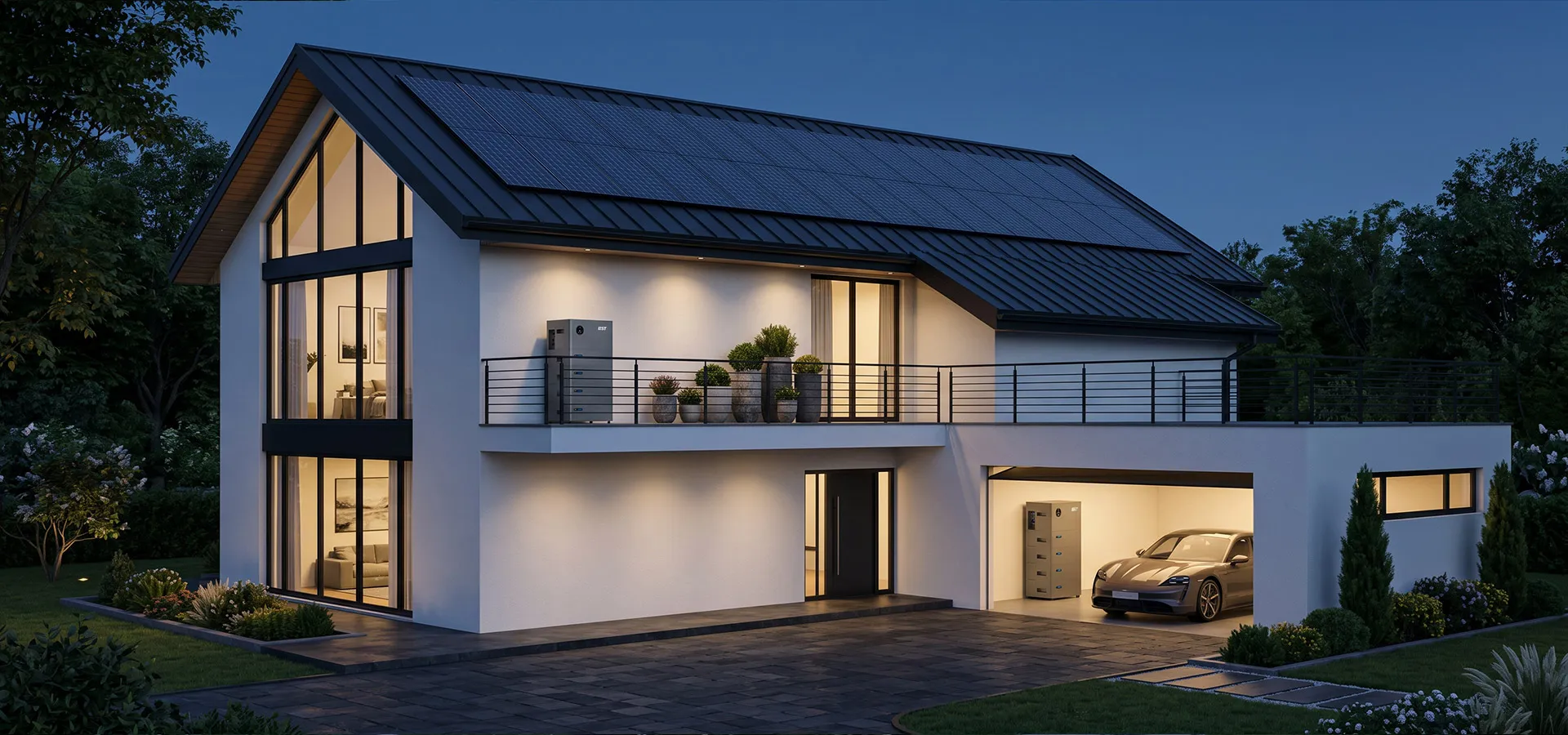
7. The US Market Is Opening New Opportunities for Distributed Energy Storage
The United States is developing a different but increasingly complementary energy storage market.
California is advancing legislation related to balcony solar, community solar and virtual power plants (VPPs). Several bills moving through the California legislature could simplify regulatory treatment for certain plug-in solar systems while establishing frameworks for community solar and distributed energy resources.
If these policy developments continue, the US distributed energy market could increasingly resemble the European model:
Solar generation → residential battery → smart energy management → virtual power plant
This could create new opportunities for compact residential ESS and balcony energy storage solutions.
At the same time, US customers require products designed specifically for local electrical standards, grid regulations and certification requirements.
For North American whole-home applications, BST also offers systems such as the 12kW / 16kWh Whole Home Battery Backup System, designed around 120/240V split-phase architecture and scalable battery expansion.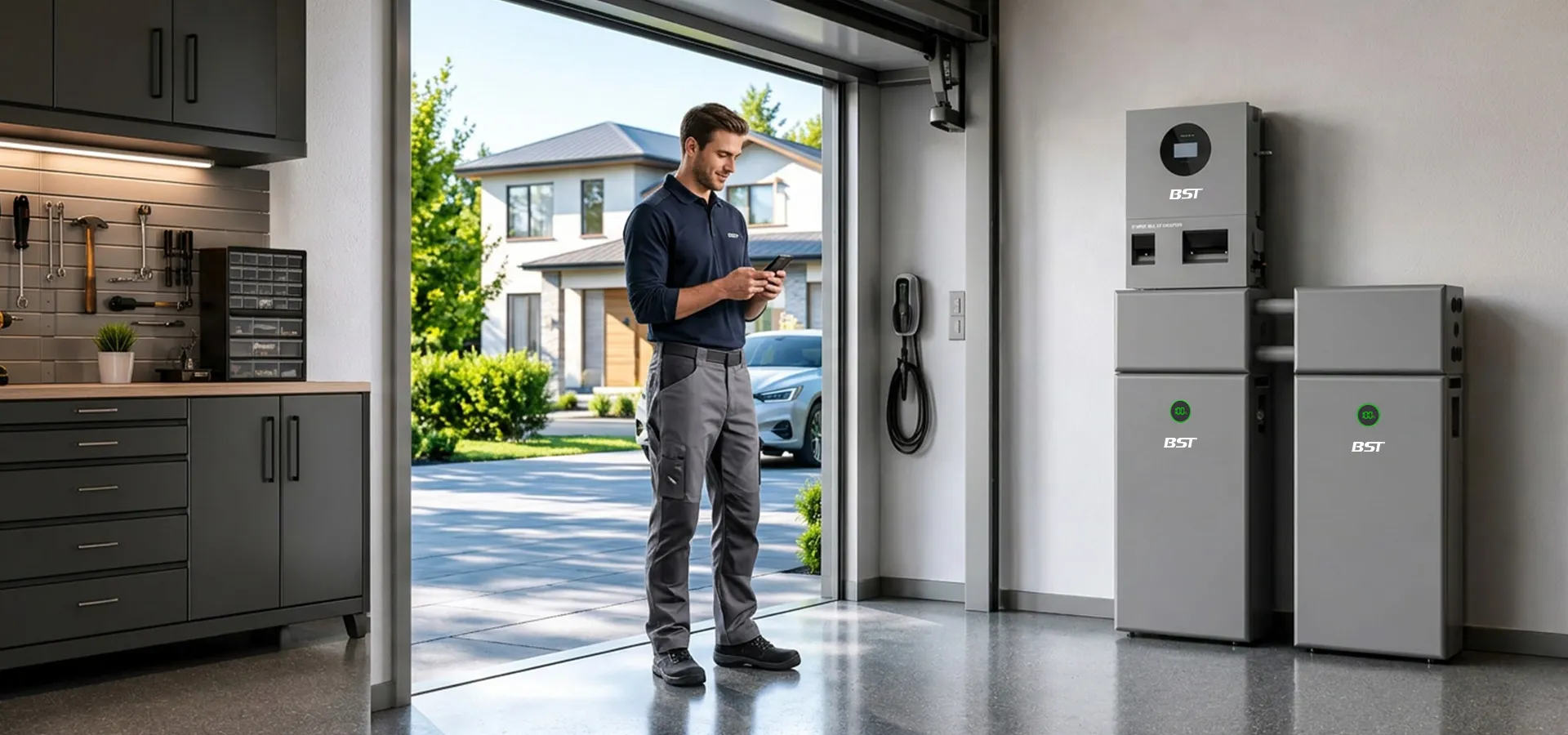
8. Battery Manufacturers Are Moving Closer to End Customers
Another important development in 2026 is the changing battery supply chain.
Major battery manufacturers are increasingly developing direct sales channels for smaller system integrators and energy storage businesses.
CATL, for example, has launched an online B2B sales platform for energy storage cells, allowing smaller buyers to purchase cells through a more direct channel.
This reflects an important change in the battery industry:
Battery cells are becoming increasingly accessible, while system integration, certification, software and market localization are becoming more important sources of value.
For energy storage brands, simply purchasing cells is no longer enough.
Customers increasingly need:
-
Complete battery systems
-
Integrated BMS
-
Inverter compatibility
-
Certifications
-
APP and cloud platforms
-
Technical support
-
Customized product design
-
Private-label branding
-
Local market adaptation
This is where OEM/ODM energy storage partnerships can create significant value.
9. Carbon Footprint and Supply-Chain Compliance Are Becoming Strategic Requirements
Another major trend is the increasing importance of carbon management throughout the battery supply chain.
CATL recently announced progress toward carbon neutrality across its core battery operations and a longer-term objective for value-chain carbon neutrality.
This indicates that carbon footprint management is moving beyond corporate sustainability reporting and increasingly becoming part of supplier selection and market access.
For battery and energy storage manufacturers targeting Europe, this trend is particularly important.
Future customers may evaluate suppliers based not only on:
Price + Capacity + Certification
but also:
Carbon Footprint + Traceability + Supply Chain Transparency + Sustainability
Energy storage manufacturers should therefore prepare for increasingly stringent environmental and supply-chain requirements.
10. OEM/ODM Is Becoming More Valuable in a Globalizing Energy Storage Market
The global expansion of energy storage manufacturing is creating another important trend.
Chinese battery and energy storage companies are increasingly establishing manufacturing capacity or local operations in Europe, North America, Southeast Asia, the Middle East and other regions.
For local energy companies, however, building a complete battery manufacturing operation is expensive and time-consuming.
This creates an opportunity for OEM/ODM energy storage manufacturers.
Instead of investing heavily in their own factory, brands can work with an experienced manufacturer to customize:
-
Battery hardware
-
System configuration
-
Product appearance
-
Brand identity
-
Packaging
-
Mobile APP
-
Cloud platform
-
User interface
-
Technical specifications
-
Market-specific certifications
BST Power focuses on this type of partnership through its OEM/ODM residential energy storage solutions, helping brands, distributors, installers and energy solution providers develop customized residential ESS products.
11. What These Market Trends Mean for Energy Storage Businesses
Taken together, the latest developments point to several clear directions for the global energy storage industry.
1. Energy storage is moving from optional equipment to energy infrastructure
The expansion of renewable energy requires storage to balance generation and consumption.
2. Long-duration storage is gaining strategic importance
The UK and Ireland demonstrate that four-hour and ultra-long-duration storage will become increasingly important as renewable penetration rises.
3. Residential storage remains a high-growth segment
Higher electricity prices, solar self-consumption and backup requirements continue to support residential battery demand.
4. Balcony energy storage is evolving into a smart energy platform
The next generation of balcony ESS will combine batteries, inverters, APPs, dynamic tariffs and intelligent energy management.
5. Local market adaptation is becoming essential
A product designed for Germany may not be directly suitable for the UK, US or other markets. Grid standards, certification, electrical architecture and customer requirements vary considerably.
6. OEM/ODM can reduce market-entry barriers
For emerging brands and local energy companies, partnering with an experienced manufacturer can accelerate product launches without requiring investment in a complete manufacturing facility.
12. How BST Power Supports the Global Energy Storage Market
As an energy storage manufacturer with extensive OEM/ODM experience, BST Power provides customizable solutions for residential and distributed energy storage markets.
Our product portfolio covers:
-
Balcony Energy Storage Systems
-
Residential Battery Storage
-
AC-Coupled Energy Storage
-
Hybrid Energy Storage Systems
-
Whole-Home Backup Systems
-
LiFePO₄ Battery Systems
-
Smart Energy Management
-
OEM/ODM Energy Storage Solutions
Our residential energy storage solutions are designed for applications ranging from urban apartments and balcony solar systems to villas, residential backup and solar retrofit projects.
For larger residential systems, BST's PB-16 16kWh LiFePO₄ Battery provides 16kWh usable energy, IP67 protection, smart BMS and support for up to 15 units in parallel.
Beyond hardware, BST also provides an integrated smart energy ecosystem including APP monitoring, installer tools, cloud management and AI-powered energy management, helping partners build complete branded energy solutions rather than simply selling batteries.
Conclusion: The Global Energy Storage Market Is Entering Its Next Growth Stage
The August 2026 market developments show that the global energy storage industry is moving in several directions simultaneously.
Europe is accelerating utility-scale and residential battery deployment. The UK is investing in ultra-long-duration energy storage. Portugal and Italy are expanding storage procurement. Ireland is demonstrating growing demand for four-hour BESS. Meanwhile, California is advancing distributed solar, balcony solar and virtual power plant policies.
At the same time, battery manufacturers are expanding globally, direct cell sales are becoming more accessible, and carbon footprint requirements are becoming increasingly important.
For energy storage companies, the key competitive advantage will therefore not simply be battery capacity or cell price.
The future belongs to flexible, certified, intelligent and locally adaptable energy storage solutions.
For distributors, installers, EPCs and energy brands looking to enter or expand in the residential energy storage market, an experienced OEM/ODM partner can significantly reduce product development time and accelerate market entry.
BST Power is ready to work with global partners to build the next generation of customized energy storage solutions.
Explore BST Power Energy Storage Products →
Category: Energy Storage Market | Battery Energy Storage | Residential ESS
The global energy storage market is entering a new phase in 2026.
Across Europe and North America, governments are accelerating battery energy storage deployment through new policies, grid-scale tenders, long-duration energy storage programs and distributed energy initiatives. At the same time, battery manufacturers are expanding overseas production, strengthening direct sales channels and placing greater emphasis on carbon footprint and supply-chain compliance.
For energy storage manufacturers, distributors, installers and system integrators, these changes are creating new opportunities — but they are also raising the requirements for product flexibility, certification, local market adaptation and supply-chain capabilities.
Based on the latest market developments in August 2026, BST Power summarizes several key trends shaping the global energy storage industry.
1. Europe Continues to Accelerate Battery Energy Storage Deployment
Europe remains one of the world's most active energy storage markets, with the UK, Ireland, Portugal, Italy, Greece and emerging Eastern European markets all expanding their storage capacity.
The market is no longer driven only by short-duration frequency regulation. Four-hour and longer-duration battery energy storage systems (BESS) are becoming increasingly important as renewable energy penetration rises.
UK Launches £28 Million Ultra-Long Duration Energy Storage Challenge
The UK government launched the £28 million Ultra-Long Duration Energy Storage (Ultra-LDES) Challenge on August 20, 2026.
The program supports technologies capable of storing renewable electricity for 100 hours or more, including advanced battery technologies and underground hydrogen storage. The UK government says the initiative is designed to strengthen energy security, reduce dependence on expensive gas generation and support the development of new clean-energy industries.
The UK has also been considering additional mechanisms to support long-duration electricity storage projects.
What this means for the market:
The UK's energy storage market is gradually moving from conventional short-duration applications toward longer-duration and higher-value storage. This creates opportunities not only for utility-scale BESS developers, but also for battery technology suppliers, system integrators and companies capable of delivering customized energy storage solutions.
For BST Power, the development reinforces the importance of developing flexible battery platforms that can be adapted to different market requirements.
2. Ireland Demonstrates Growing Demand for Long-Duration BESS
Ireland is also moving toward larger and longer-duration battery storage projects.
Capital Dynamics recently acquired a 170MW/680MWh battery energy storage project in County Kerry, equivalent to four hours of storage. The project is considered one of the early long-duration BESS projects in the Republic of Ireland.
Ireland's high share of renewable generation, particularly wind power, creates increasing demand for energy storage that can absorb excess renewable electricity and release it during periods of high demand.
This development highlights a broader European trend:
Battery storage is increasingly becoming a core part of renewable-energy infrastructure rather than simply a backup technology.
For energy storage suppliers, this means the addressable market is expanding from residential applications toward commercial, industrial and utility-scale projects.
3. Portugal Raises Its Energy Storage Ambition to 3 GW
Portugal is another European market showing strong momentum.
The country's National Energy Storage Strategy has increased its battery storage target to 3 GW by 2030, compared with the previous 2 GW target under the National Energy and Climate Plan.
Portugal currently has a relatively small installed battery storage base, meaning the country still has substantial room for market expansion. Two competitive procedures planned for September are expected to allocate approximately 1.05 GW of new grid-connected storage capacity, including standalone storage and renewable projects combined with storage.
This creates potential opportunities for:
-
Battery energy storage system suppliers
-
EPC companies
-
Energy storage system integrators
-
Battery manufacturers
-
Local distributors and installers
-
OEM/ODM energy storage partners
For companies entering the Portuguese market, early partnerships with local installers and energy solution providers could become strategically important.
4. Italy and Other European Markets Are Expanding Storage Procurement
Italy is also preparing additional large-scale energy storage procurement as the country works toward its 2030 storage targets.
Meanwhile, Greece is experiencing increased electricity price volatility, with extreme summer temperatures, lower wind generation and higher gas prices contributing to higher wholesale electricity prices.
For residential and commercial consumers, higher electricity price volatility can improve the economic case for battery energy storage.
This creates two parallel opportunities:
Utility-scale storage can help stabilize renewable-heavy electricity systems, while residential and commercial energy storage can help customers increase solar self-consumption and reduce exposure to expensive grid electricity.
5. Residential Energy Storage Is Becoming More Attractive
While utility-scale BESS continues to grow, residential energy storage remains an important part of the European energy transition.
Higher electricity prices, dynamic tariffs, rooftop solar adoption and increasing demand for backup power are creating stronger incentives for homeowners to store excess solar energy and use it when electricity prices are higher.
For residential applications, the market is increasingly moving toward:
-
Modular battery systems
-
Hybrid inverter systems
-
AC-coupled energy storage
-
Balcony energy storage
-
Whole-home backup
-
Intelligent energy management
-
Dynamic electricity tariff optimization
BST Power provides several residential energy storage architectures designed for different applications.
For example, the PT2-SG-HB Balcony Hybrid ESS combines a hybrid inverter and LiFePO₄ battery system with expandable capacity, AI energy management and smart APP monitoring.
For customers upgrading an existing solar PV system, BST's PBS-SG-AC AC-Coupled Residential ESS provides an AC-coupled approach that allows battery storage to be added without replacing the existing PV inverter.
These configurations are particularly relevant for European residential solar retrofit projects.
6. Balcony Energy Storage Could Become a Key Distributed Energy Market
Balcony solar has become one of the most visible distributed energy trends in Europe, particularly in Germany and other European residential markets.
The concept is simple: small photovoltaic systems generate electricity locally, while a compact battery stores excess energy for later use.
The next stage of this market is moving from simple plug-in solar generation toward balcony solar + battery storage + smart energy management.
BST's PT-SG-AC Balcony Energy Storage System is designed for this type of application, with modular battery expansion, AC-coupled architecture, smart APP monitoring and dynamic tariff functionality.
The broader opportunity is not limited to individual consumers.
Local installers, distributors, energy retailers and private-label brands can use OEM/ODM solutions to develop their own residential energy storage offerings.
7. The US Market Is Opening New Opportunities for Distributed Energy Storage
The United States is developing a different but increasingly complementary energy storage market.
California is advancing legislation related to balcony solar, community solar and virtual power plants (VPPs). Several bills moving through the California legislature could simplify regulatory treatment for certain plug-in solar systems while establishing frameworks for community solar and distributed energy resources.
If these policy developments continue, the US distributed energy market could increasingly resemble the European model:
Solar generation → residential battery → smart energy management → virtual power plant
This could create new opportunities for compact residential ESS and balcony energy storage solutions.
At the same time, US customers require products designed specifically for local electrical standards, grid regulations and certification requirements.
For North American whole-home applications, BST also offers systems such as the 12kW / 16kWh Whole Home Battery Backup System, designed around 120/240V split-phase architecture and scalable battery expansion.
8. Battery Manufacturers Are Moving Closer to End Customers
Another important development in 2026 is the changing battery supply chain.
Major battery manufacturers are increasingly developing direct sales channels for smaller system integrators and energy storage businesses.
CATL, for example, has launched an online B2B sales platform for energy storage cells, allowing smaller buyers to purchase cells through a more direct channel.
This reflects an important change in the battery industry:
Battery cells are becoming increasingly accessible, while system integration, certification, software and market localization are becoming more important sources of value.
For energy storage brands, simply purchasing cells is no longer enough.
Customers increasingly need:
-
Complete battery systems
-
Integrated BMS
-
Inverter compatibility
-
Certifications
-
APP and cloud platforms
-
Technical support
-
Customized product design
-
Private-label branding
-
Local market adaptation
This is where OEM/ODM energy storage partnerships can create significant value.
9. Carbon Footprint and Supply-Chain Compliance Are Becoming Strategic Requirements
Another major trend is the increasing importance of carbon management throughout the battery supply chain.
CATL recently announced progress toward carbon neutrality across its core battery operations and a longer-term objective for value-chain carbon neutrality.
This indicates that carbon footprint management is moving beyond corporate sustainability reporting and increasingly becoming part of supplier selection and market access.
For battery and energy storage manufacturers targeting Europe, this trend is particularly important.
Future customers may evaluate suppliers based not only on:
Price + Capacity + Certification
but also:
Carbon Footprint + Traceability + Supply Chain Transparency + Sustainability
Energy storage manufacturers should therefore prepare for increasingly stringent environmental and supply-chain requirements.
10. OEM/ODM Is Becoming More Valuable in a Globalizing Energy Storage Market
The global expansion of energy storage manufacturing is creating another important trend.
Chinese battery and energy storage companies are increasingly establishing manufacturing capacity or local operations in Europe, North America, Southeast Asia, the Middle East and other regions.
For local energy companies, however, building a complete battery manufacturing operation is expensive and time-consuming.
This creates an opportunity for OEM/ODM energy storage manufacturers.
Instead of investing heavily in their own factory, brands can work with an experienced manufacturer to customize:
-
Battery hardware
-
System configuration
-
Product appearance
-
Brand identity
-
Packaging
-
Mobile APP
-
Cloud platform
-
User interface
-
Technical specifications
-
Market-specific certifications
BST Power focuses on this type of partnership through its OEM/ODM residential energy storage solutions, helping brands, distributors, installers and energy solution providers develop customized residential ESS products.
11. What These Market Trends Mean for Energy Storage Businesses
Taken together, the latest developments point to several clear directions for the global energy storage industry.
1. Energy storage is moving from optional equipment to energy infrastructure
The expansion of renewable energy requires storage to balance generation and consumption.
2. Long-duration storage is gaining strategic importance
The UK and Ireland demonstrate that four-hour and ultra-long-duration storage will become increasingly important as renewable penetration rises.
3. Residential storage remains a high-growth segment
Higher electricity prices, solar self-consumption and backup requirements continue to support residential battery demand.
4. Balcony energy storage is evolving into a smart energy platform
The next generation of balcony ESS will combine batteries, inverters, APPs, dynamic tariffs and intelligent energy management.
5. Local market adaptation is becoming essential
A product designed for Germany may not be directly suitable for the UK, US or other markets. Grid standards, certification, electrical architecture and customer requirements vary considerably.
6. OEM/ODM can reduce market-entry barriers
For emerging brands and local energy companies, partnering with an experienced manufacturer can accelerate product launches without requiring investment in a complete manufacturing facility.
12. How BST Power Supports the Global Energy Storage Market
As an energy storage manufacturer with extensive OEM/ODM experience, BST Power provides customizable solutions for residential and distributed energy storage markets.
Our product portfolio covers:
-
Balcony Energy Storage Systems
-
Residential Battery Storage
-
AC-Coupled Energy Storage
-
Hybrid Energy Storage Systems
-
Whole-Home Backup Systems
-
LiFePO₄ Battery Systems
-
Smart Energy Management
-
OEM/ODM Energy Storage Solutions
Our residential energy storage solutions are designed for applications ranging from urban apartments and balcony solar systems to villas, residential backup and solar retrofit projects.
For larger residential systems, BST's PB-16 16kWh LiFePO₄ Battery provides 16kWh usable energy, IP67 protection, smart BMS and support for up to 15 units in parallel.
Beyond hardware, BST also provides an integrated smart energy ecosystem including APP monitoring, installer tools, cloud management and AI-powered energy management, helping partners build complete branded energy solutions rather than simply selling batteries.
Conclusion: The Global Energy Storage Market Is Entering Its Next Growth Stage
The August 2026 market developments show that the global energy storage industry is moving in several directions simultaneously.
Europe is accelerating utility-scale and residential battery deployment. The UK is investing in ultra-long-duration energy storage. Portugal and Italy are expanding storage procurement. Ireland is demonstrating growing demand for four-hour BESS. Meanwhile, California is advancing distributed solar, balcony solar and virtual power plant policies.
At the same time, battery manufacturers are expanding globally, direct cell sales are becoming more accessible, and carbon footprint requirements are becoming increasingly important.
For energy storage companies, the key competitive advantage will therefore not simply be battery capacity or cell price.
The future belongs to flexible, certified, intelligent and locally adaptable energy storage solutions.
For distributors, installers, EPCs and energy brands looking to enter or expand in the residential energy storage market, an experienced OEM/ODM partner can significantly reduce product development time and accelerate market entry.
BST Power is ready to work with global partners to build the next generation of customized energy storage solutions.
Explore BST Power Energy Storage Products →

Copyright © 2026 BST POWER. All rights reserved.